ICEBEAR
The research ICEBEAR (Ionospheric Continuous-wave E-region Bi-static Experimental Auroral Radar) focuses on explaining the natural phenomena in the Earth's ionosphere.
The ionosphere is the partially ionised transition region between the neutral atmosphere below and fully ionised space above.
An ionised medium has electrons and ions, electrically charged particles, which are `free' to move around.
Electric and magnetic fields, which are present almost anywhere, interact strongly with ionised mediums exhibiting significantly different behaviour than the neutral atmosphere we are familiar with on the Earth's surface.
As the ionosphere begins at roughly 100 km altitude only rockets or satellites can directly observe the medium; however, a way to remotely probe this region is by using radars.
A new innovative advanced digital radar, ICEBEAR-3D, makes detailed observations of the lowest portion of the ionosphere, the E-region, which is the first ionised layer above the neutral atmosphere.
The radar is able to detect the motion of ionised particles. This charged particle motion is equivalent to an electrical current and is also responsible for the beautiful aurora borealis (northern lights) displays.
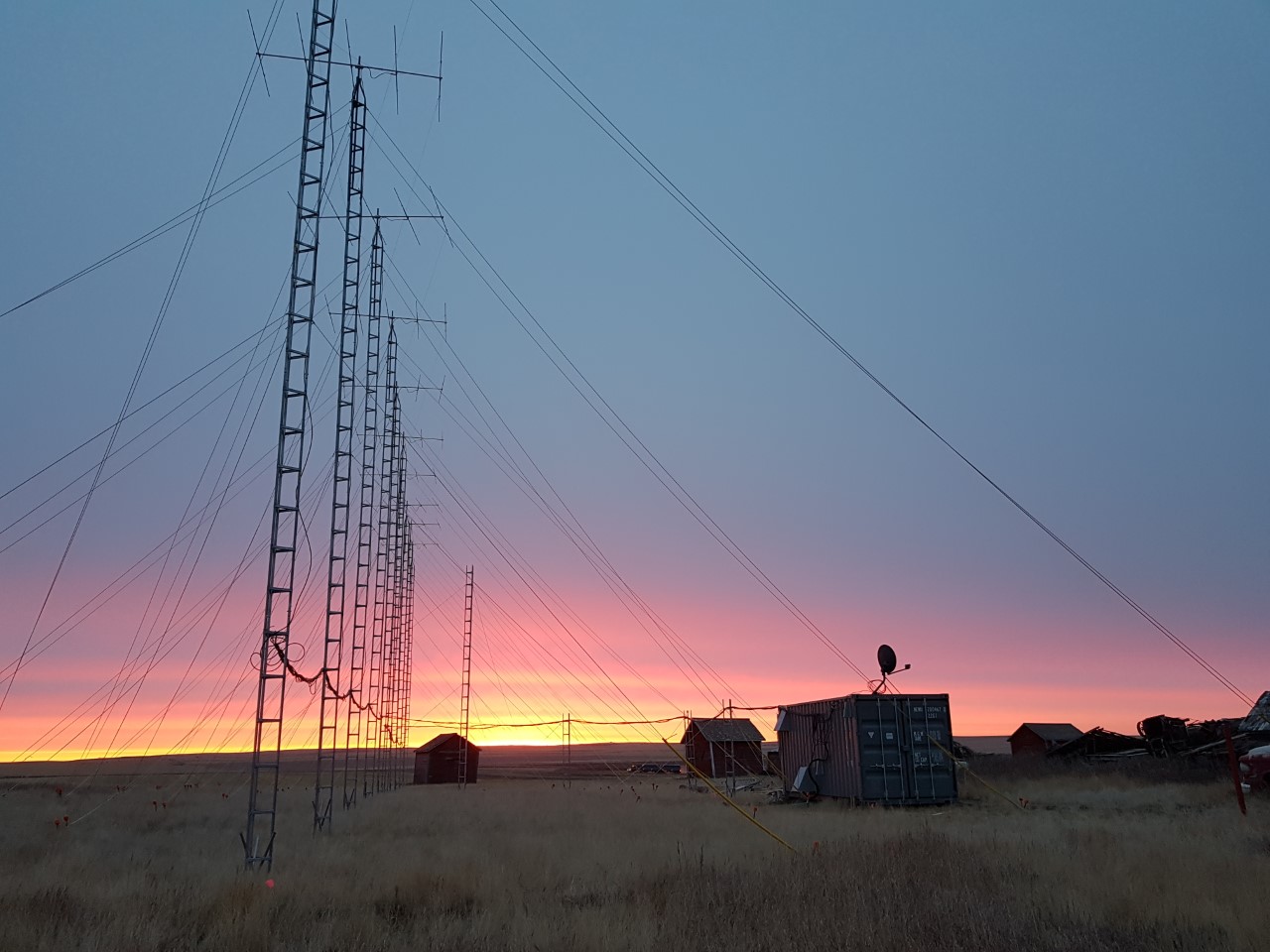
Sunrise at the ICEBEAR Transmitter Site
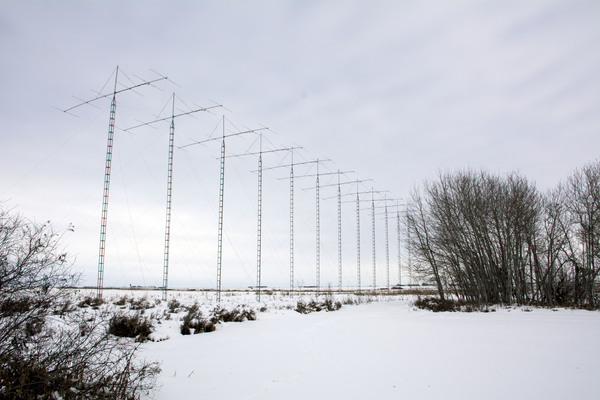
Snowy Day at Receiver Site Antennas (Pre ICEBEAR-3D Array Configuration)
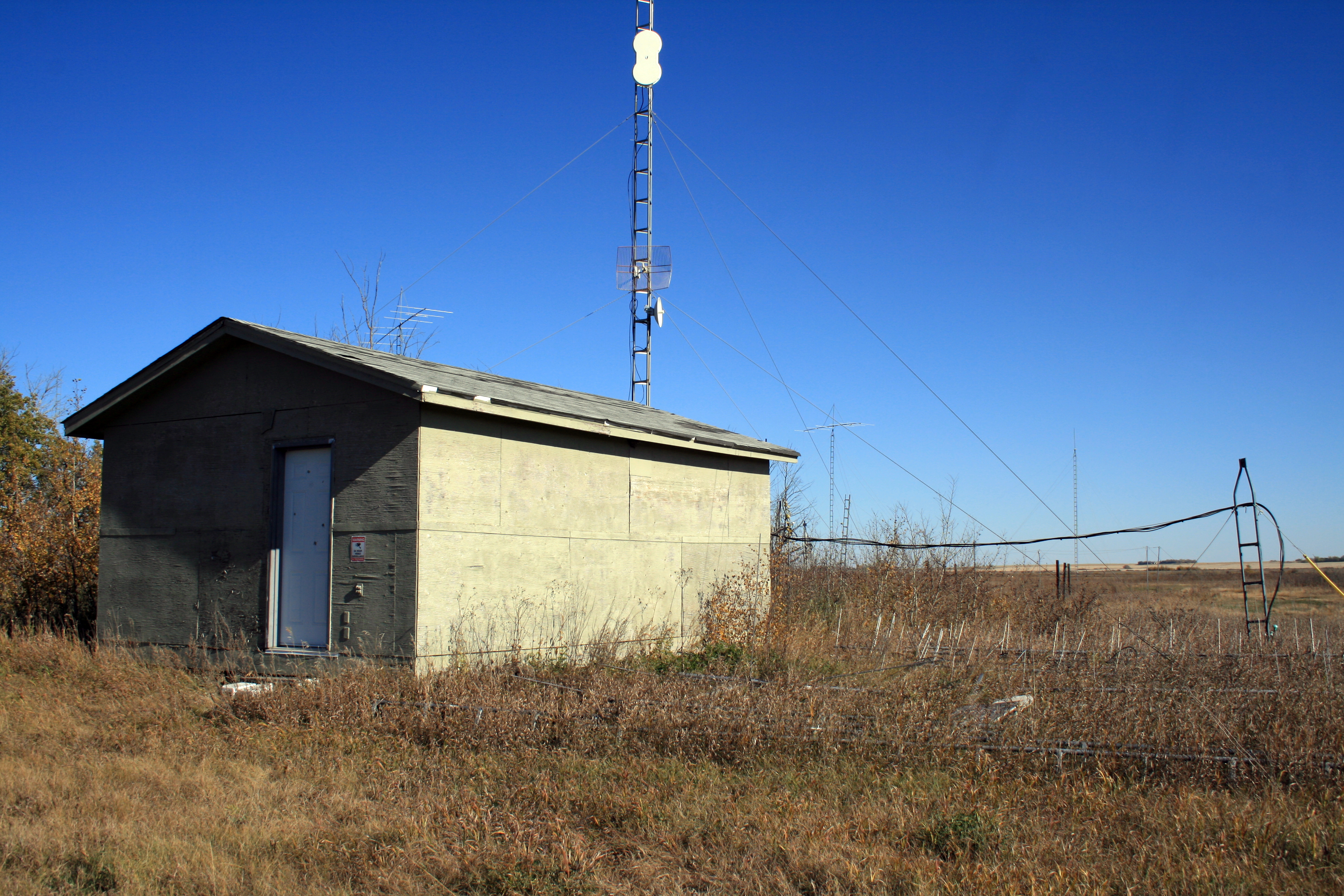
Bakker Site Building
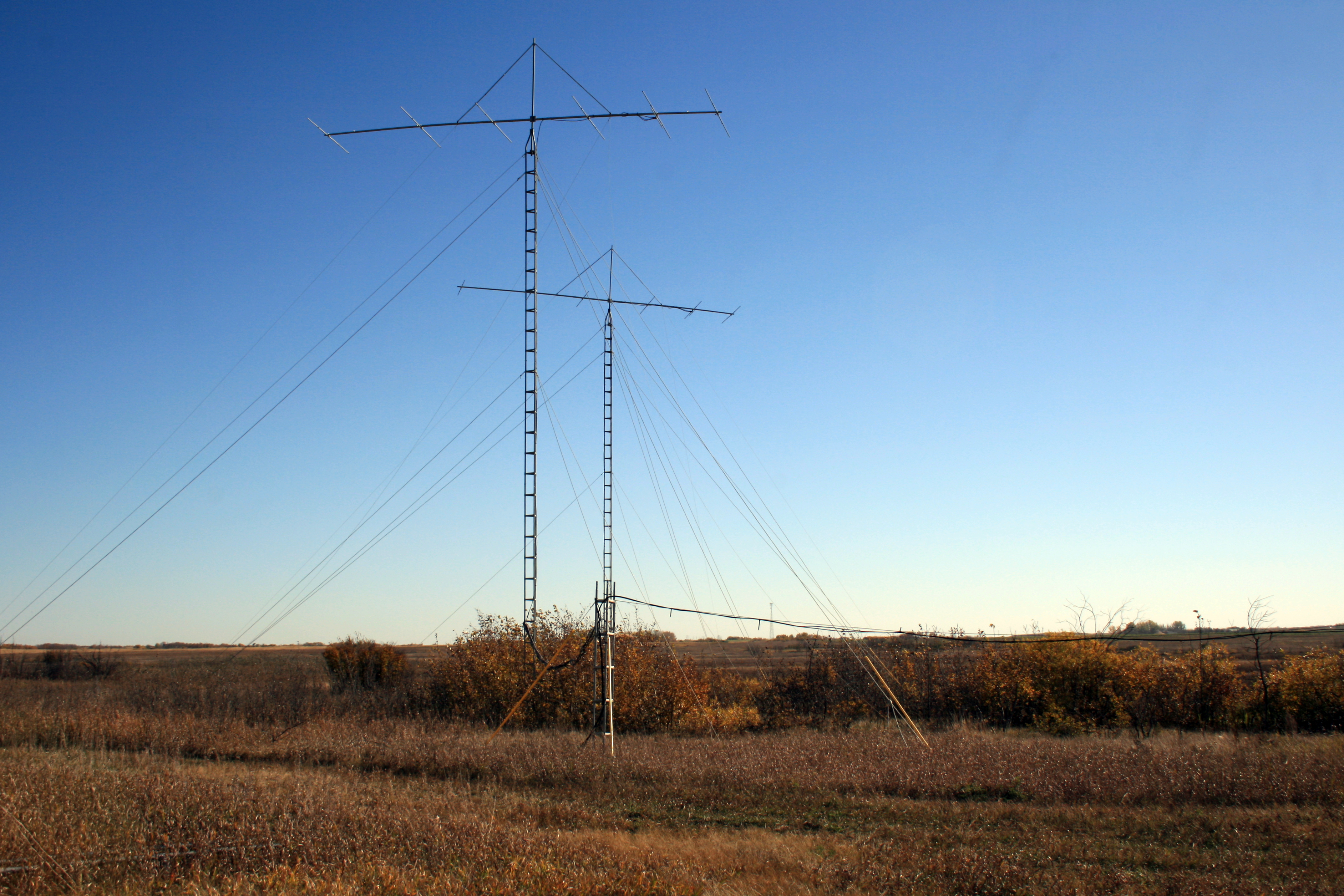
Receiver Site Antennas 2 and 4
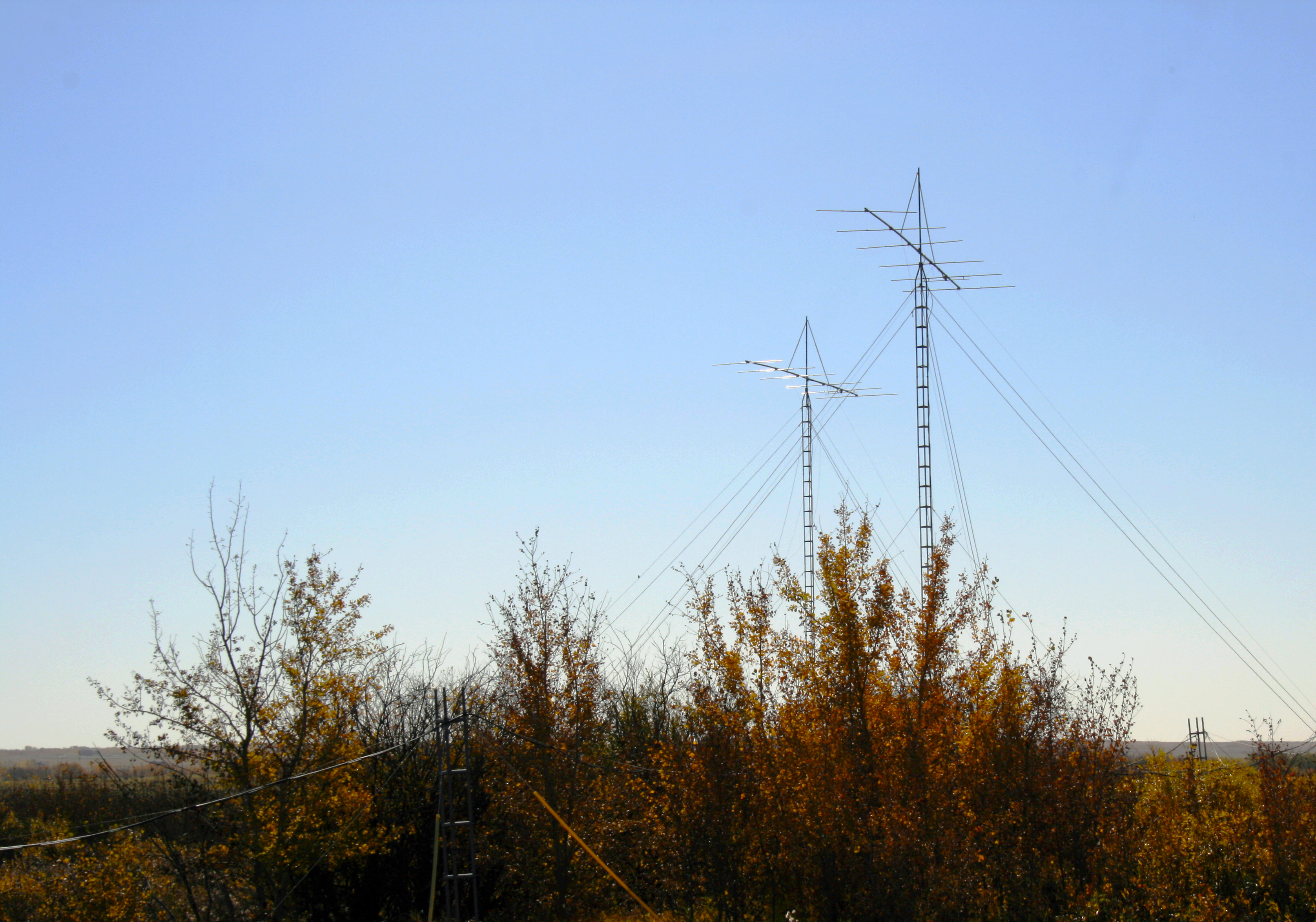
Receiver Site Antennas 6 and 7
ICEBEAR acknowledges its many funding and research partners that make this project possible: